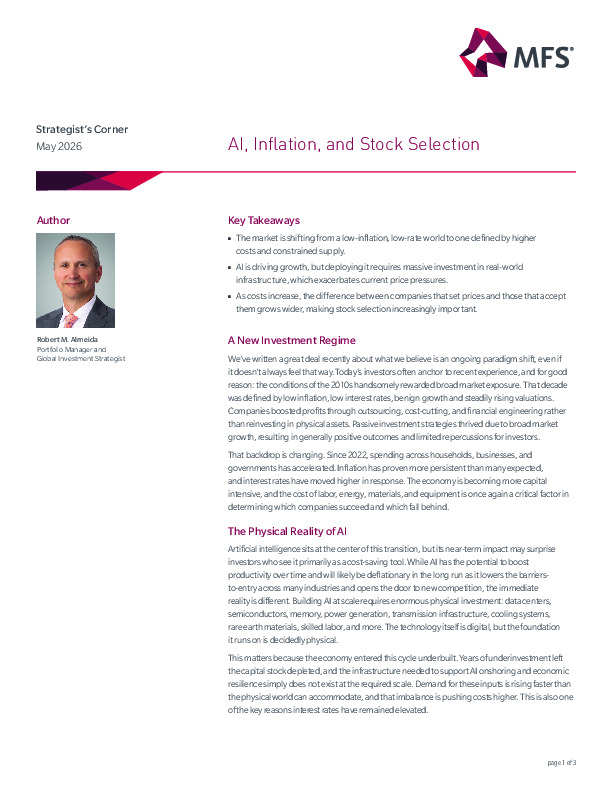
MFS argues investors are underestimating the physical and inflationary consequences of the AI boom, which increasingly depends on scarce infrastructure, energy, labor, and industrial capacity.
- AI may ultimately prove deflationary, but its near-term deployment requires enormous investment in data centers, semiconductors, transmission grids, cooling systems, and raw materials.
- Years of underinvestment have left the global economy structurally constrained, contributing to persistent inflation and higher interest rates.
- The report argues the investment regime has shifted away from financial engineering toward scarcity, reinvestment, resilience, and pricing power.
- With equity risk premiums near multi-decade lows, MFS sees stock selection becoming increasingly important as margin pressure separates winners from losers.
The central question, according to MFS, is no longer whether AI changes the economy — but which companies can absorb the costs of building it.
Continue reading this article?
Register for free and get access to Investment Officer International:
- Exclusive for professional investors
- Cancel anytime
- Unlimited access: web, app and newsletters
Registration takes less than 1 minute.
No payment details required
Register for free and get access to Investment Officer Luxembourg:
- Exclusive for professional investors
- Cancel anytime
- Unlimited access: web, app and newsletters
Registration takes less than 1 minute.
No payment details required