
The comparison is increasingly common. Luxembourg is often described as the Singapore of Europe. It is meant as praise, and rightly so. But the comparison deserves refinement, because it cuts both ways.
Both countries share a trait that is rare and increasingly valuable: pragmatic governments that are good at decision making. In Luxembourg and in Singapore, policy is shaped with a clear understanding of economic reality. Decisions are coordinated, execution follows strategy, and public institutions work closely with the private sector. That pragmatism is one of the reasons both countries punch far above their weight.
There is no doubt that Luxembourg can learn from Singapore. Decision making in Singapore is fast, disciplined, and highly coordinated. Policies are implemented with clarity, and adjustments are made without unnecessary friction. In areas such as talent attraction, digital infrastructure, and long-term planning, Singapore sets a benchmark many jurisdictions admire.
Singapore’s Variable Capital Company regime feels familiar to anyone who knows Luxembourg well.
Yet in the domain that matters most to Luxembourg, investment funds, the balance of expertise tilts the other way.
Luxembourg is not simply good at funds. It is the global reference point for cross-border fund structuring and distribution. Over decades, it has built an ecosystem that allows funds to be manufactured in one jurisdiction, distributed across dozens of countries, and trusted by investors worldwide. Ucits and AIFMD did not become global standards by accident. They became standards because Luxembourg operationalized them at scale.
It is therefore not surprising that Singapore’s Variable Capital Company regime feels familiar to anyone who knows Luxembourg well. The VCC is not a copy, but its logic is recognizably aligned with Luxembourg-style fund architecture. Umbrella structures. Compartments. Investor protection combined with operational flexibility. These ideas have been refined in Luxembourg over many years.
Singapore has been a global trading and capital markets hub for decades. Luxembourg has played a similarly long game in a different domain: the internationalization of investment funds. While Singapore connected Asia to global markets, Luxembourg quietly connected global capital to Europe and beyond through a dense network of cross-border fund structures.
Singapore is the Luxembourg of Asia. Luxembourg is the Singapore of Europe. Each relies on pragmatic governance, disciplined execution, and ecosystem thinking rather than scale.
Trust sits at the heart of this role. Luxembourg’s regulator, the CSSF, maintains extensive cooperation agreements with foreign supervisors around the world. These arrangements are not symbolic. They smooth registrations, reduce friction, and reinforce Luxembourg’s reputation as a serious and predictable jurisdiction. This is why Luxembourg remains the center of gravity for global fund distribution.
Seen from this angle, the comparison becomes clearer. Singapore is the Luxembourg of Asia. Luxembourg is the Singapore of Europe. Each relies on pragmatic governance, disciplined execution, and ecosystem thinking rather than scale.
The more interesting question is what happens when these two hubs are viewed together.
Already today, we see parallel fund structures between Singapore and Luxembourg. Asian managers launch Luxembourg funds to access Europe. European managers explore Singapore structures to access Asia. Service providers and AIFMs increasingly operate across both hubs.
There is more to explore.
In a fragmented world, power does not only come from size. It comes from relevance, trust, and the ability to connect markets that would otherwise remain separate. On their own, Luxembourg and Singapore are exceptional niche hubs.
Together, they could function as a virtual power jurisdiction for global investment funds.
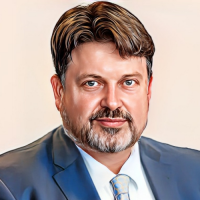
Christophe Santer is a columnist for Investment Officer Luxembourg. He serves as a consultant at Mangis Bay, a boutique cooperative of senior experts for the global fund industry.