
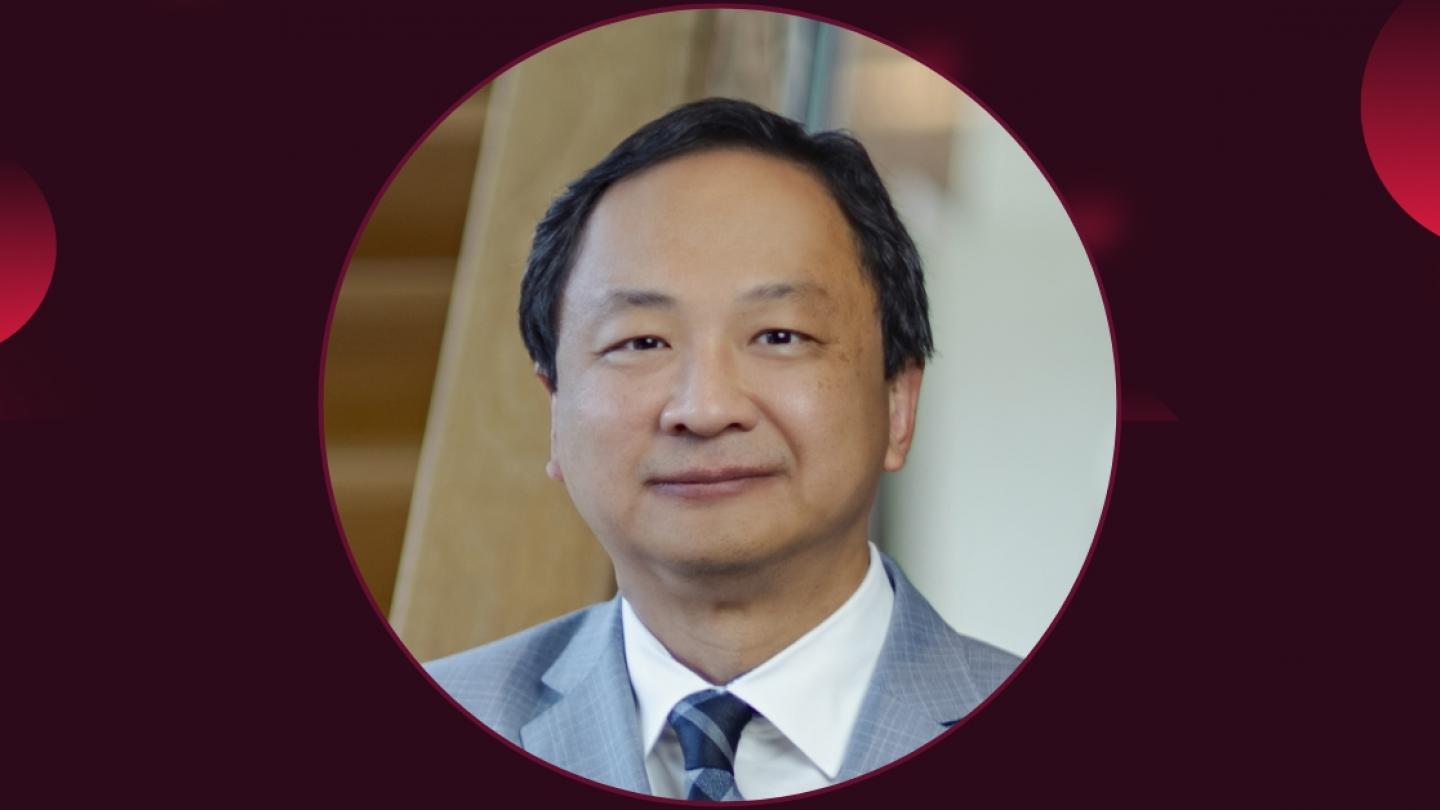
Artificial intelligence has rapidly climbed to become a leading force in financial markets. Yet according to Mike Chen, Head of Next-Gen Quant Research at Robeco, this is only the beginning. “From a microscopic insect to the intelligence level of a cat in six years. That is how fast AI is evolving. The pace will only accelerate, with far-reaching consequences for markets and for the investment industry itself.”
According to Chen, you can no longer publish an investment outlook without putting AI at the centre. In addition to his work at Robeco, he also teaches at MIT. “Otherwise, you are ignoring the largest investment programme in the world economy.”
Chen expects AI to become far more dominant in the coming years. We are now “in the Cisco era of AI”, he says, referring to the mid-1990s period when the world was laying cables, building data centres, and installing routers to make the internet possible. “The real applications will come later, but the infrastructure is being built now.”
Billions in investment
This construction phase is a megatrend that will continue for years, Chen argues. The billions flowing into chips, data centres, cooling, grid upgrades, and power generation are only just beginning. Where annual capex is currently around 300 to 400 billion dollars, Chen believes it could easily double by 2030. He sees that increase as one of the most certain movements in the market. “If you want AI visions to become reality, you need an enormous amount of computing power.”
Many investors are now piling into AI-related stocks, yet hardly understand the technology under the bonnet. Chen sees this as a natural argument for active management. “If you want to invest in AI, rely on someone who actually understands it.”
Beware of AI-washing
Chen also warns of “AI-washing”: companies and asset managers claiming to use AI without having real operational capabilities. The parallel with greenwashing is obvious. “Everyone says they use AI. But who has the data, the people, the infrastructure, and is making the right investments? That will be the relevant question.”
Robeco has been committed for years to using AI as a tool within the investment process, Chen notes. He points to the Dynamic Theme Machine strategy, an AI-powered Robeco model that identifies global themes and trends based on vast volumes of text and data across multiple languages.
“The system spots emerging themes before most of the market,” Chen says. Sometimes these themes are obvious, such as AI infrastructure or AI-driven advertising, but the model also produces surprising niches. For example, it detected a motorsport trend in the US, partly fuelled by the Netflix series Drive to Survive. “Unfortunately, the investable universe was too narrow. Not every theme is suitable, which is why a fundamental investor always reviews it. AI can generate rapid, widely supported observations, but only an experienced investor can judge whether a signal makes sense in the context of a business model, a sector, or the macro environment.”
At the core of the investment process
Beyond identifying trends, Robeco has been working for years to integrate AI into the core of its investment process. Chen stresses that this is not about marginal experiments, but about the systematic use of technology that affects portfolios containing tens of billions on a daily basis.
Its quant strategies include machine-learning components that predict price movements based on patterns invisible to traditional factor strategies. “It is a small but growing component within our overall alpha models. You need to be cautious when scaling technology. But we see that it delivers insights that differ from classical factors. That makes it valuable.”
Robeco has extended this technology to create a global small-cap strategy that is fully driven by machine learning. Chen describes a fully integrated AI system that generates daily buy and sell signals for hundreds of companies. The model detects local patterns, unusual market dynamics, and market regimes that are often too granular for human analysts.
Opportunities and risks in 2026
So what does all this mean for the outlook for 2026? Chen does not expect turning points, but he does see a clear direction. He believes the companies building the infrastructure for AI, the so-called picks and shovels, will do well. Chips, data centres, cooling, power grids, communication technology, and rare metals will all benefit from the massive investments, Chen argues.
On the risk side, he acknowledges that valuations are high, but considers it incorrect to compare 2026 with the dotcom bubble of the late 1990s. “The dotcom bubble was full of vaporware, companies with dotcom in their name but no business model. Today’s major players have real revenues and enormous cash flows. That makes it fundamentally different.” Markets rarely cooperate with collective expectations, he adds. “If everyone expects a crash in 2026, it probably will not happen.”
He also sees structural bottlenecks that present both risks and opportunities, such as the vast energy consumption of AI chips, overstretched electricity grids, and rising demand for rare metals, cooling, and specialised infrastructure.
Europe versus the US
Chen emphasises that it is too early to know who the structural winners of the AI race will be. “We do not yet know what the real breakthrough application will be. The ultimate winners are not visible today.” Yet he is strikingly positive about Europe.
Although the most significant AI breakthroughs are taking place in the US, Chen sees emerging opportunities in Europe.
Valuations are more attractive, and the market is smaller, meaning even a slight shift in capital flows away from the US can have a significant impact. “Europe is behind in innovation, but not in quality,” Chen says. “European markets could benefit from some investors wanting to be less dependent on the US.”
AI will continue to grow regardless; the infrastructure phase will continue, the applications will follow later, valuations will remain sensitive, but the trend cannot be reversed, Chen believes. “AI will become as self-evident as electricity. The real question is how quickly it will happen.”
Important information – Capital at risk
This information refers only to general information about Robeco Holding B.V. and/or its related, affiliated and subsidiary companies (“Robeco”), Robeco’s approach, strategies and capabilities. This is a marketing communication solely intended for professional investors, defined as investors qualifying as professional clients, who have requested to be treated as professional clients or who are authorized to receive such information under any applicable laws. Unless otherwise stated, the data and information reported is sourced from Robeco, is, to the best knowledge of Robeco, accurate at the time of publication and comes without any warranties of any kind. Any opinion expressed is solely Robeco’s opinion, it is not a factual statement, and is subject to change, and in no way constitutes investment advice. This document is intended only to provide an overview of Robeco’s approach and strategies. It is not a substitute for a prospectus or any other legal document concerning any specific financial instrument. The data, information, and opinions contained herein do not constitute and, under no circumstances, may be construed as an offer or an invitation or a recommendation to make investments or divestments or a solicitation to buy, sell, hold or subscribe for financial instruments or as financial, legal, tax, or investment research advice or as an invitation or to make any other use of it. All rights relating to the information in this document are and will remain the property of Robeco. This document may not be copied or used with the public. No part of this document may be reproduced or published in any form or by any means without Robeco’s prior written permission. Robeco Institutional Asset Management B.V. has a license as manager of UCITS and AIFs of the Netherlands Authority for the Financial Markets in Amsterdam.
© Q3/2025 Robeco
